
Card Create Co.
Case studyThe problemA game idea needs a whole deck before anyone can playtest it.
An idea.
A deck.
A playtest.
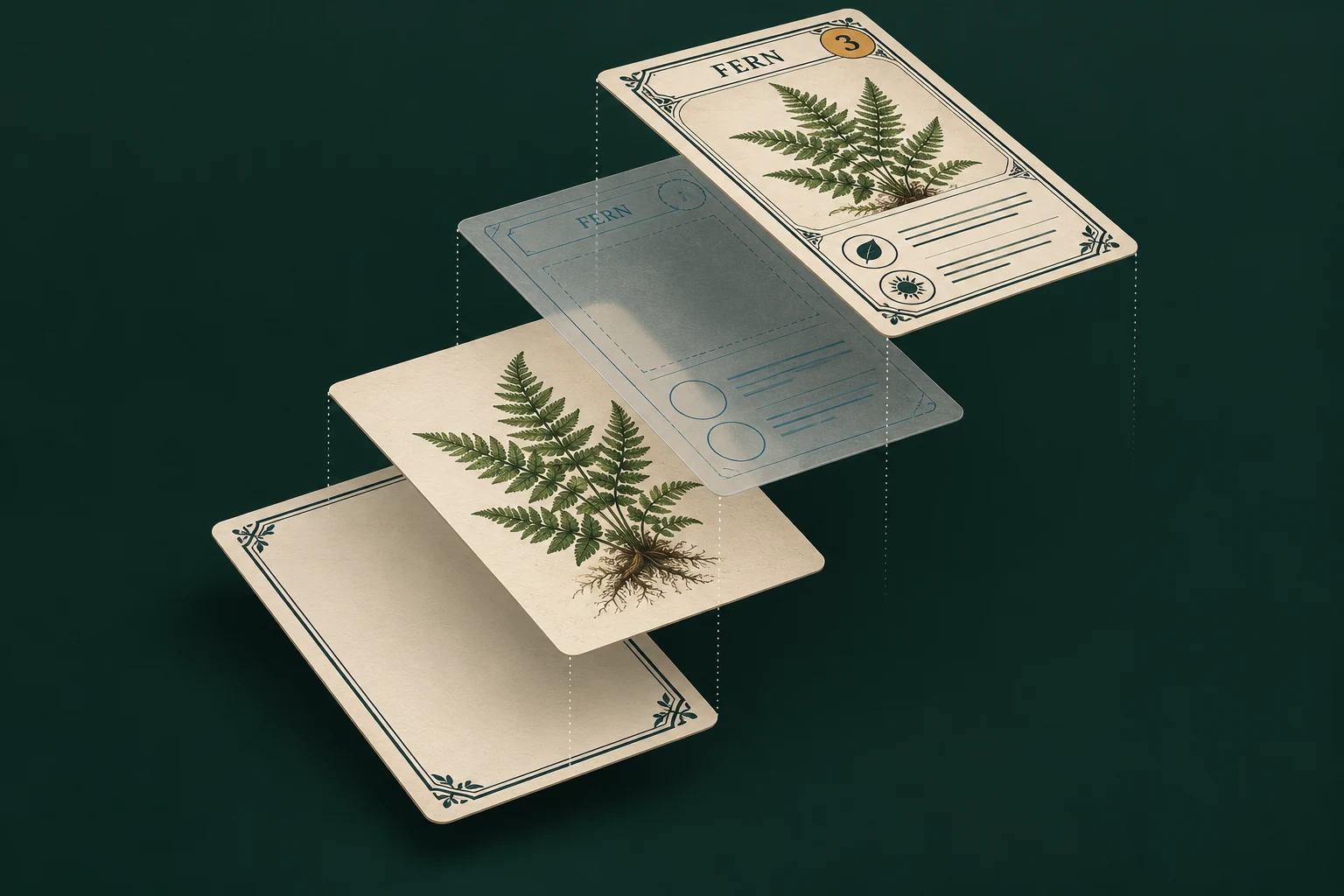
Reusable layouts. Editable layers.
Get your game to the table.
I built Card Create Co. for the stage between “I have a game idea” and “let’s play a round.” Card games, board-game components and custom packs all need a fast way to make, revise and repeat a design.
The problem
A card idea still needs a playable deck.
Rules, artwork, costs and symbols have to become cards that people can actually use. Designing every card separately makes each rules change another layout job. Waiting for finished illustration before testing slows down the game itself.
The first useful output is a readable prototype that can teach you something in a playtest.
The solution
Define a reusable layout for your game.
Start with the fields your game needs: a title, rules, artwork, costs or custom symbols. Keep the frame reusable so the deck has a consistent visual language as new cards are added.
The prototype can also become a blueprint for an artist to replace the temporary artwork later.
The draft
Use AI to start the design, then edit the parts.
Describe a layout or bring a visual reference. Generate a first draft when it helps, or upload your own art and work manually. Text, artwork and layout stay separately editable, so a useful draft can keep evolving.
Generation is optional. An image that looks finished is less useful than a design I can still change.
The revision
Change the rules without rebuilding the card.
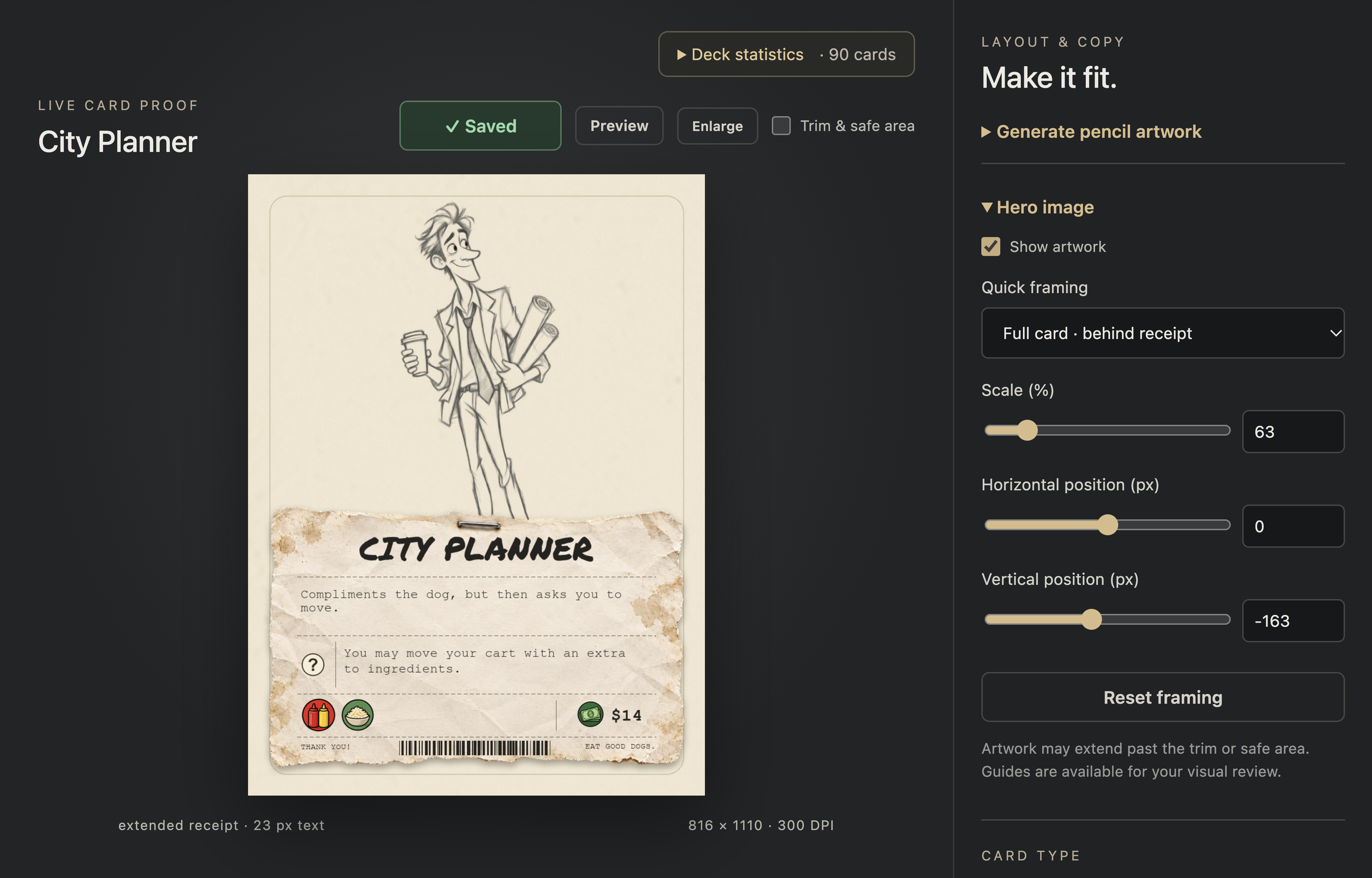
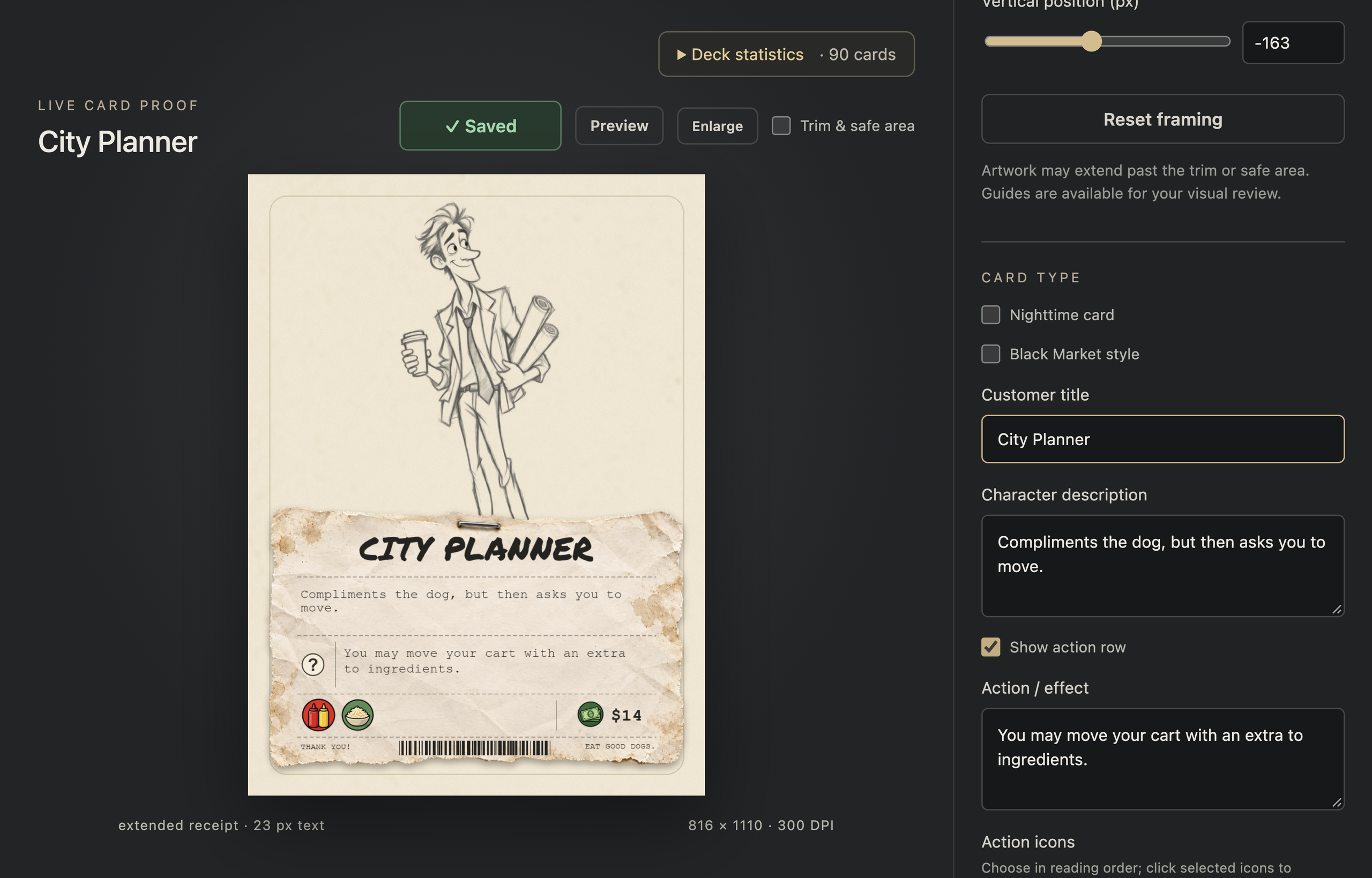
Adjust copy, image framing, symbols and visibility independently. Save the deck and its shared design as you work. Review quantities and deck totals alongside the visuals, so balancing the game stays part of the same process.
I wanted small changes to stay small: changing a cost or hiding a row should not mean recreating the entire card.
The result
Print a prototype and bring it to the table.
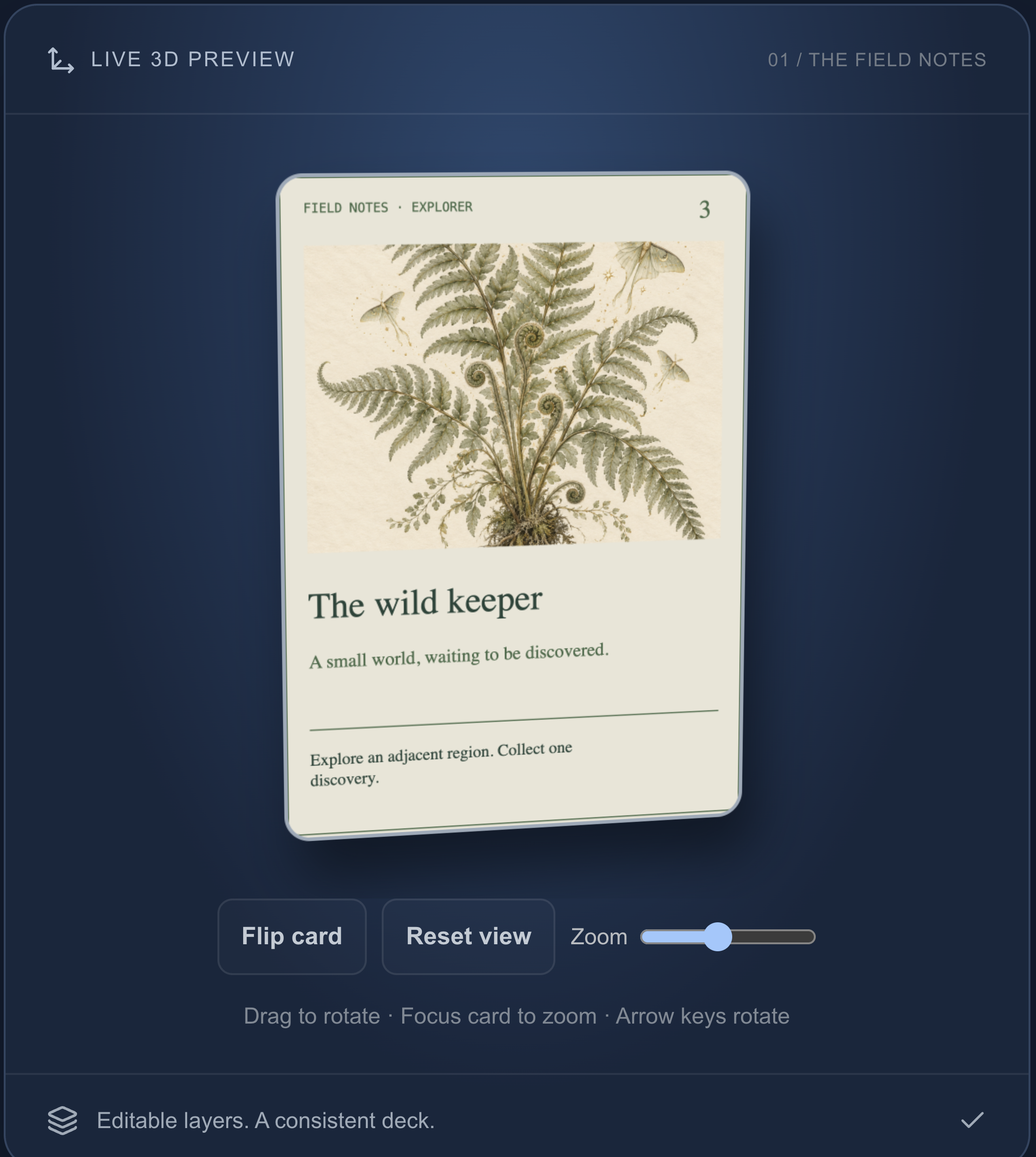
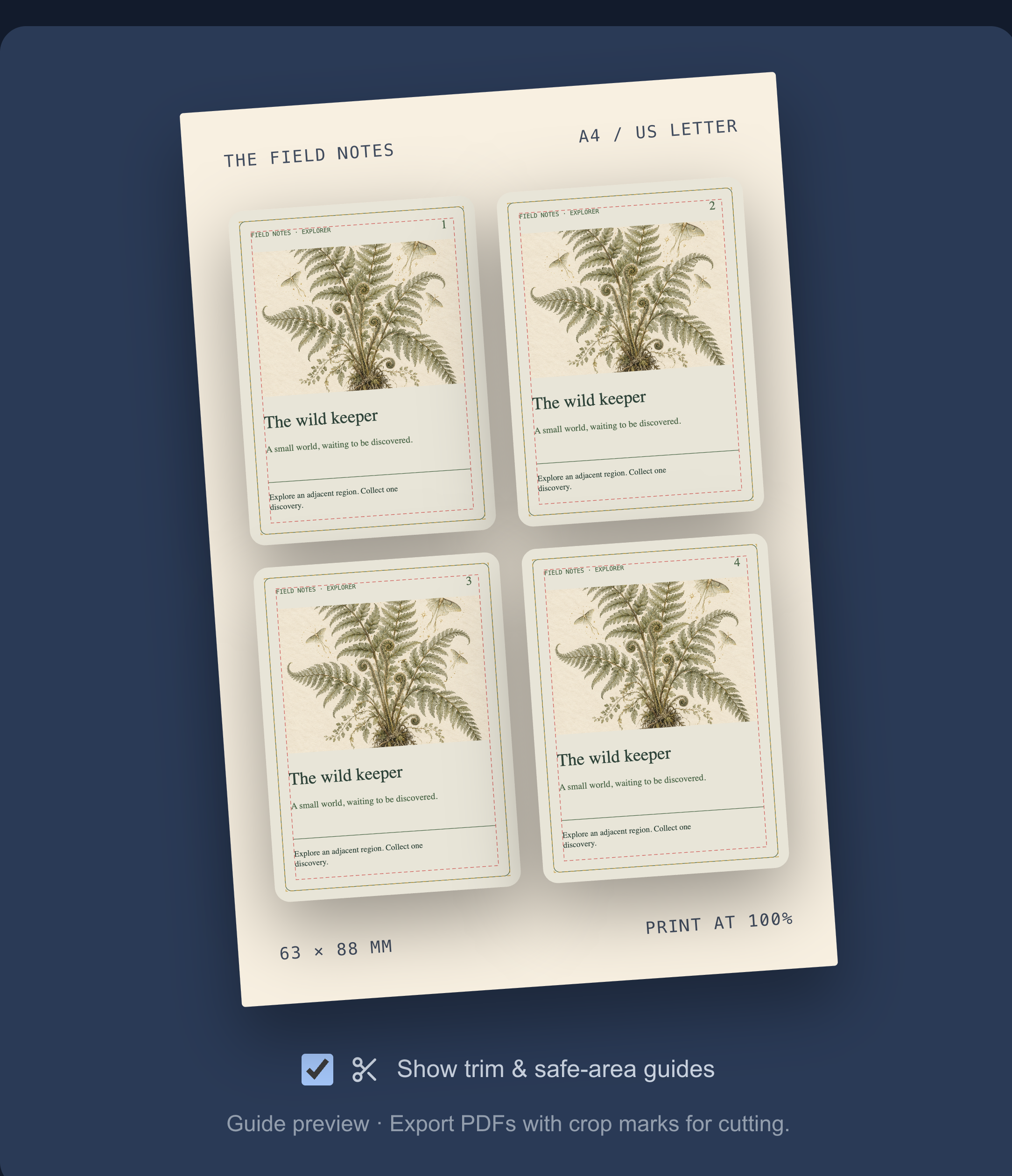
Review the cards in 3D, check trim and safe areas, and export a test sheet or digital files. Play a round, find what is confusing, then return to the editable deck. Final artwork can arrive after the rules have earned it.
The playtest is the feedback loop. The designer still owns the rules, balance and final print approval.
Behind the build
My part in Card Create Co..
I built the workflow around reusable layouts and independent card elements. The earlier local card-game editor helped establish the need to revise art, rules and symbols separately. Card Create Co. turns that into a broader studio with optional generation, saved decks, deck statistics and export tools.
Evidence & what’s next
The botanical card and print sheet are real previews from the current public product page. The City Planner editing screen comes from the earlier local prototype. The exploded card is a generated layer illustration. These show the workflow; this pass did not sign in, run paid generation or verify a physical print.
Cloud saving requires an account. AI capabilities and costs depend on the selected provider. The print workflow is for RGB prototypes; the preview does not establish physical print accuracy or customer adoption.
Build the same small deck manually and with reusable templates. Measure layout corrections, time to update a shared design and errors found in quantities and a physical test print.